


Pallet jacks are one of the most practical tools for moving palletized goods through warehouses, stockrooms, loading docks, supermarkets and industrial facilities. Also known as pallet trucks or pallet trolleys, they allow operators to move heavy loads efficiently while reducing manual handling.
If you’re looking to upgrade your warehouse setup, explore our full range of pallet jacks for sale including manual and electric options suited to Australian workplaces.
Understanding how to use a pallet jack correctly not only improves productivity but also helps reduce the risk of workplace injuries. Whether you are using a manual pallet jack or an electric pallet jack, the fundamentals remain the same.
What Is a Pallet Jack?
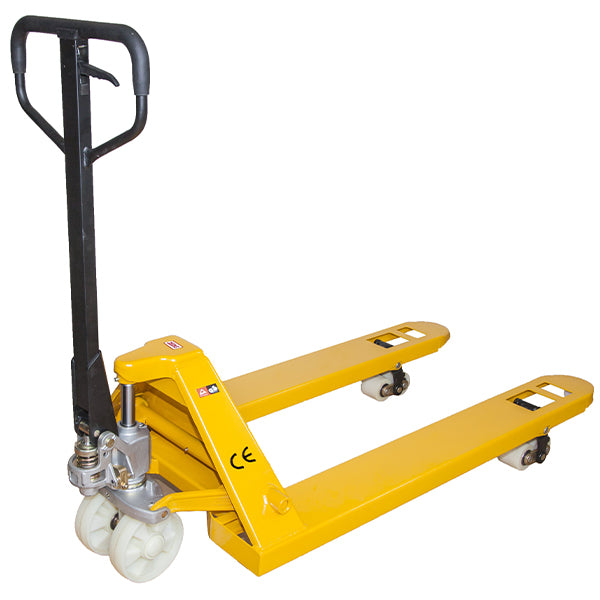
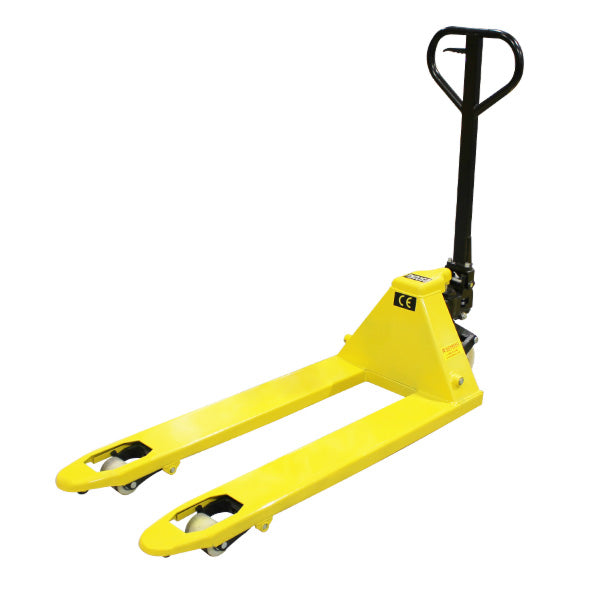
A pallet jack is a material handling tool used to lift and move pallets at ground level. It has two forks that slide under the pallet, a handle for steering and a lifting system that raises the pallet slightly off the floor.
A manual pallet jack uses a hand-operated hydraulic pump. The operator pumps the handle to lift the pallet, then pushes or steers the pallet jack into position. An electric pallet jack uses powered drive and lift functions, which reduces physical effort and can make frequent pallet movement easier in busy workplaces.
Pallet jacks are commonly used for unloading deliveries, moving stock between storage areas, replenishing retail displays and shifting palletised goods across short distances. They are not designed to lift pallets to racking height like a forklift. Instead, they are built for safe, efficient floor-level pallet movement.

How to Use a Pallet Jack
To use a pallet jack, start by checking the equipment and the load. Make sure the forks, wheels, handle and hydraulic system are in good condition. Check that the pallet is not damaged and that the goods are stable before moving it.
Next, line the forks up with the pallet openings. Push the forks fully under the pallet so the load is properly supported. Avoid lifting a pallet if the forks are only partly inserted, as this can make the load unstable.
Once the forks are in position, pump the handle to raise the pallet just high enough to clear the floor. A pallet jack does not need to lift the load very high. Raising it too far can make it harder to control.
Move slowly and keep the pallet stable as you travel. In most situations, it is safer to push a pallet jack rather than pull it, because pushing gives better control and reduces strain on the body. When you reach the destination, use the release lever to lower the pallet carefully to the floor.
Manual Pallet Jack vs Electric Pallet Jack
A manual pallet jack is a cost-effective option for general warehouse, retail and stockroom use. It is simple to operate, easy to maintain and does not require charging. Manual pallet jacks are best suited to short-distance movement and occasional to moderate use.
An electric pallet jack is designed for more frequent pallet handling. It uses powered drive and lift functions to reduce manual effort, making it useful in warehouses, logistics centres, supermarkets and distribution facilities where staff move pallets throughout the day.
Electric pallet jacks can help reduce operator fatigue, especially when moving heavier loads or travelling longer distances. Many electric models also include braking controls, controlled acceleration and lithium-ion battery systems for practical day-to-day use.
If your workplace only moves pallets occasionally, a manual pallet jack may be enough. If pallet handling is part of daily operations, an electric pallet jack can improve efficiency and make the job easier for staff.
Do Pallet Jacks Have Brakes?
Some pallet jacks have brakes, but not all models do. Many manual pallet jacks rely on the operator’s control, the handle and the floor surface rather than a dedicated braking system. Electric pallet jacks are more likely to include braking functions, powered controls and emergency stop features.
If your workplace has ramps, slopes, loading docks or high-traffic areas, braking control becomes more important. Staff should move slowly, avoid steep inclines where possible and never rely on a pallet jack to hold a load on a slope unless the equipment is designed for that use.
Before buying a pallet jack, check the specifications to make sure it suits the conditions of your workplace.
Supporting Equipment and Accessories
To keep your equipment running efficiently, it’s worth considering spare parts and accessories. For example, having a spare lithium-ion battery available can help minimise downtime when using electric pallet jacks.
Proper maintenance and having the right accessories on hand can extend the life of your equipment and improve reliability.
How Much Can a Pallet Jack Lift?
The lifting capacity depends on the model. Many standard manual pallet jacks are rated around 2,000 kg to 2,500 kg, while heavy duty pallet jacks and specialist models may offer different capacities.
Always check the rated capacity before use. Overloading a pallet jack can damage the equipment, make the load unstable and increase the risk of injury. It can also make the pallet harder to stop, turn or control.
For frequent heavy loads, choose a pallet jack that is built for industrial use. For lighter or occasional use, a standard manual pallet jack may be suitable.

Choosing the Right Pallet Jack for Your Workplace
The right pallet jack depends on your load weight, pallet size, aisle space, floor surface and how often the equipment will be used.
For general pallet movement, a manual pallet jack is often the most practical choice. For tight spaces, a small or narrow pallet jack may be easier to manoeuvre. For oversized or non-standard pallets, long pallet jacks or Euro pallet jacks may be required.
For high-frequency pallet movement, heavier workloads or longer travel distances, an electric pallet jack can be a better option. It reduces physical effort and supports more efficient material handling in busy environments.
Wheel material is also important. Polyurethane wheels are quieter and help protect smooth floors, while nylon wheels can reduce rolling resistance under heavier loads.
Final Thoughts
Learning how to use a pallet jack properly helps improve safety, reduce manual handling strain and keep stock moving efficiently. A manual pallet jack is a reliable choice for everyday pallet movement, while an electric pallet jack is a smart upgrade for busy workplaces that handle pallets frequently.
AdMerch supplies manual and electric pallet jacks for warehouses, retail stores, logistics centres, workshops and industrial sites across Australia. Explore the AdMerch pallet jack range to find the right pallet truck for your workplace.